We keep losing residents and we don’t know why.
Your rents are competitive. The units are in good shape. You renovated the clubhouse last year. You run move-in specials that work. People sign.
They seem happy enough. And then—twelve months later—they’re gone. Not to a cheaper building. Not to a different city.
Just… gone.
You’ve probably chalked it up to market conditions, or the economy, or the fact that people just move more than they used to.
And some of that’s true.
But if you’re running a portfolio of 200 or more units and watching 40–50% of your residents leave every year, something else is happening. Something your rent comps and market surveys aren’t going to explain.
Your residents aren’t leaving because of price. They’re leaving because of experience.
The Real Cost of the Wrong Diagnosis
The residential property management industry averages a 45% annual turnover rate. That number gets treated like weather—something that just happens, something you manage around. But it’s not weather. It’s a signal.
Here’s what that signal costs:

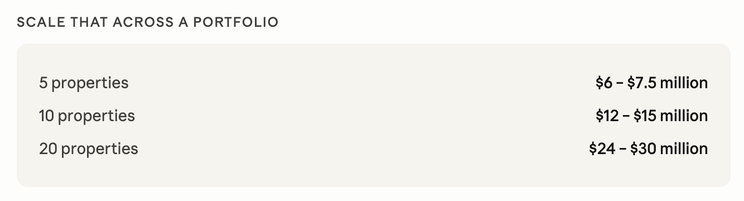
That pushes the portfolio math to:
We keep losing residents and we don’t know why.
Your rents are competitive. The units are in good shape. You renovated the clubhouse last year. You run move-in specials that work. People sign.
They seem happy enough. And then—twelve months later—they’re gone. Not to a cheaper building. Not to a different city.
Just… gone.
You’ve probably chalked it up to market conditions, or the economy, or the fact that people just move more than they used to.
And some of that’s true.
But if you’re running a portfolio of 200 or more units and watching 40–50% of your residents leave every year, something else is happening. Something your rent comps and market surveys aren’t going to explain.
Your residents aren’t leaving because of price. They’re leaving because of experience.
The Real Cost of the Wrong Diagnosis
The residential property management industry averages a 45% annual turnover rate. That number gets treated like weather—something that just happens, something you manage around. But it’s not weather. It’s a signal.
Here’s what that signal costs:
That pushes the portfolio math to:We keep losing residents and we don’t know why.
Your rents are competitive. The units are in good shape. You renovated the clubhouse last year. You run move-in specials that work. People sign.
They seem happy enough. And then—twelve months later—they’re gone. Not to a cheaper building. Not to a different city.
Just… gone.
You’ve probably chalked it up to market conditions, or the economy, or the fact that people just move more than they used to.
And some of that’s true.
But if you’re running a portfolio of 200 or more units and watching 40–50% of your residents leave every year, something else is happening. Something your rent comps and market surveys aren’t going to explain.
Your residents aren’t leaving because of price. They’re leaving because of experience.
The Real Cost of the Wrong Diagnosis
The residential property management industry averages a 45% annual turnover rate. That number gets treated like weather—something that just happens, something you manage around. But it’s not weather. It’s a signal.
Here’s what that signal costs:
That pushes the portfolio math to:
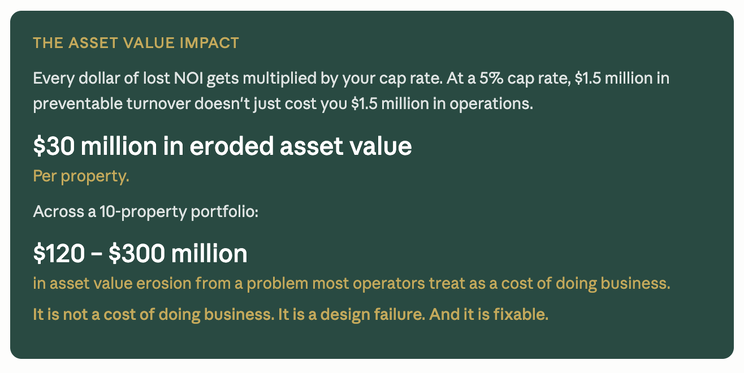
Not in capital improvements or new acquisitions—in churn. In painting units, replacing carpet, running vacancy ads, processing applications, and coordinating move-ins for people who are replacing the people you just lost.
And here’s what the data consistently shows: the majority of those residents didn’t leave because of rent.
They left because the experience of living in your property didn’t match what they expected when they signed the lease. The maintenance request that sat for six days. The front office that never returned a call. The feeling that nobody on the other side of that lease actually cared whether they stayed or went.
This isn’t a pricing problem. It’s an experience gap. And until you diagnose it correctly, you’ll keep spending millions trying to solve something that rent adjustments can’t fix.
Five Questions That Show You Where the Gap Is
You don’t need a six-month consulting engagement to figure out whether your operation has a customer value problem. You need five honest answers.
1. How long does it take to respond to a maintenance request?
Not resolve—respond. The resident who submits a work order at 9 AM and hears nothing until 4 PM has already started writing the story in their head: They don’t care. Response time is the single fastest indicator of how your operation treats residents, regardless of what your website says.
2. Do residents know who to contact and how, without searching?
If your resident must dig through an app, a website, and an old email to figure out how to reach someone when their AC goes out in July, you’ve already failed the accessibility test. Clear, simple communication channels aren’t a perk. They’re the baseline.
3. When was the last time someone from your team had a non-transactional conversation with a resident?
Not a lease renewal reminder. Not a rent payment confirmation. An actual human conversation. If the only time your residents hear from you is when you need something, you’ve built a transactional relationship. Transactional relationships are easy to leave.
4. How do you measure resident satisfaction—and when did you last act on it?
A lot of operators run surveys. Far fewer do anything with the results. If your last satisfaction survey surfaced a pattern—say, consistent complaints about communication—and nothing changed in the operation, the survey isn’t a tool. It’s a prop.
5. Would your staff describe resident experience as a priority—or as something that gets attention after everything else?
This is the question that cuts deepest. Your team knows the truth. If resident experience lives at the bottom of the daily priority list—after leasing targets, after vendor management, after compliance—then your operation isn’t designed around the people paying rent. It’s designed around everything except them.
If you answered these honestly and felt a distance between what you believe about your operation and what the answers reveal, you’ve just identified the experience gap: the distance between what your residents expect and what your operation actually delivers.
Every operator has some version of this gap. The ones who close it are the ones who stop losing residents to problems that have nothing to do with rent.
This Isn’t Just a Residential Problem
If you’re reading this and you don’t manage apartments—you run a company, lead a division, manage a team that serves clients—read those five questions again. Swap “resident” for “customer” or “client.”
How fast do you respond when a client raises an issue? Do your customers know how to reach the right person without friction? When was the last time someone on your team had a conversation with a customer that wasn’t about a transaction or a problem?
The experience gap lives in every business. The gap between what your leadership team says about customer experience and what your operation is actually built to deliver.
Residential property management makes the cost visible—you can count the turns, calculate the vacancy loss, track the dollars walking out the door. But every business pays this cost. Most just can’t see it as clearly.
The diagnostic works everywhere. The question is whether you’re willing to answer honestly.
WHAT IF CLOSING THE EXPERIENCE GAP DIDN’T COST YOU ANYTHING?
Most operators read a newsletter like this and think: that sounds expensive.
It doesn’t have to be.
Cassidine Consulting offers a residential services model where the residents fund the experience improvements—not your P&L. Your residents get the concierge-level living experience they’re willing to pay for. You get lower turnover, higher NOI, and stronger asset value. Nobody’s budget takes a hit.
The property management company doesn’t pay. The residents do. Because when the experience is worth it, people will invest in where they live.
If you manage 200+ units and you’re tired of spending a million dollars a year replacing people who didn’t have to leave—let’s talk about what a resident-funded model looks like for your portfolio.
One conversation. One hour. No cost to your company. cassidineconsulting.com/consultation
Not in capital improvements or new acquisitions—in churn. In painting units, replacing carpet, running vacancy ads, processing applications, and coordinating move-ins for people who are replacing the people you just lost.
And here’s what the data consistently shows: the majority of those residents didn’t leave because of rent.
They left because the experience of living in your property didn’t match what they expected when they signed the lease. The maintenance request that sat for six days. The front office that never returned a call. The feeling that nobody on the other side of that lease actually cared whether they stayed or went.
This isn’t a pricing problem. It’s an experience gap. And until you diagnose it correctly, you’ll keep spending millions trying to solve something that rent adjustments can’t fix.
Five Questions That Show You Where the Gap Is
You don’t need a six-month consulting engagement to figure out whether your operation has a customer value problem. You need five honest answers.
1. How long does it take to respond to a maintenance request?
Not resolve—respond. The resident who submits a work order at 9 AM and hears nothing until 4 PM has already started writing the story in their head: They don’t care. Response time is the single fastest indicator of how your operation treats residents, regardless of what your website says.
2. Do residents know who to contact and how, without searching?
If your resident must dig through an app, a website, and an old email to figure out how to reach someone when their AC goes out in July, you’ve already failed the accessibility test. Clear, simple communication channels aren’t a perk. They’re the baseline.
3. When was the last time someone from your team had a non-transactional conversation with a resident?
Not a lease renewal reminder. Not a rent payment confirmation. An actual human conversation. If the only time your residents hear from you is when you need something, you’ve built a transactional relationship. Transactional relationships are easy to leave.
4. How do you measure resident satisfaction—and when did you last act on it?
A lot of operators run surveys. Far fewer do anything with the results. If your last satisfaction survey surfaced a pattern—say, consistent complaints about communication—and nothing changed in the operation, the survey isn’t a tool. It’s a prop.
5. Would your staff describe resident experience as a priority—or as something that gets attention after everything else?
This is the question that cuts deepest. Your team knows the truth. If resident experience lives at the bottom of the daily priority list—after leasing targets, after vendor management, after compliance—then your operation isn’t designed around the people paying rent. It’s designed around everything except them.
If you answered these honestly and felt a distance between what you believe about your operation and what the answers reveal, you’ve just identified the experience gap: the distance between what your residents expect and what your operation actually delivers.
Every operator has some version of this gap. The ones who close it are the ones who stop losing residents to problems that have nothing to do with rent.
This Isn’t Just a Residential Problem
If you’re reading this and you don’t manage apartments—you run a company, lead a division, manage a team that serves clients—read those five questions again. Swap “resident” for “customer” or “client.”
How fast do you respond when a client raises an issue? Do your customers know how to reach the right person without friction? When was the last time someone on your team had a conversation with a customer that wasn’t about a transaction or a problem?
The experience gap lives in every business. The gap between what your leadership team says about customer experience and what your operation is actually built to deliver.
Residential property management makes the cost visible—you can count the turns, calculate the vacancy loss, track the dollars walking out the door. But every business pays this cost. Most just can’t see it as clearly.
The diagnostic works everywhere. The question is whether you’re willing to answer honestly.
WHAT IF CLOSING THE EXPERIENCE GAP DIDN’T COST YOU ANYTHING?
Most operators read a newsletter like this and think: that sounds expensive.
It doesn’t have to be.
Cassidine Consulting offers a residential services model where the residents fund the experience improvements—not your P&L. Your residents get the concierge-level living experience they’re willing to pay for. You get lower turnover, higher NOI, and stronger asset value. Nobody’s budget takes a hit.
The property management company doesn’t pay. The residents do. Because when the experience is worth it, people will invest in where they live.
If you manage 200+ units and you’re tired of spending a million dollars a year replacing people who didn’t have to leave—let’s talk about what a resident-funded model looks like for your portfolio.
One conversation. One hour. No cost to your company. cassidineconsulting.com/consultationNot in capital improvements or new acquisitions—in churn. In painting units, replacing carpet, running vacancy ads, processing applications, and coordinating move-ins for people who are replacing the people you just lost.
And here’s what the data consistently shows: the majority of those residents didn’t leave because of rent.
They left because the experience of living in your property didn’t match what they expected when they signed the lease. The maintenance request that sat for six days. The front office that never returned a call. The feeling that nobody on the other side of that lease actually cared whether they stayed or went.
This isn’t a pricing problem. It’s an experience gap. And until you diagnose it correctly, you’ll keep spending millions trying to solve something that rent adjustments can’t fix.
Five Questions That Show You Where the Gap Is
You don’t need a six-month consulting engagement to figure out whether your operation has a customer value problem. You need five honest answers.
1. How long does it take to respond to a maintenance request?
Not resolve—respond. The resident who submits a work order at 9 AM and hears nothing until 4 PM has already started writing the story in their head: They don’t care. Response time is the single fastest indicator of how your operation treats residents, regardless of what your website says.
2. Do residents know who to contact and how, without searching?
If your resident must dig through an app, a website, and an old email to figure out how to reach someone when their AC goes out in July, you’ve already failed the accessibility test. Clear, simple communication channels aren’t a perk. They’re the baseline.
3. When was the last time someone from your team had a non-transactional conversation with a resident?
Not a lease renewal reminder. Not a rent payment confirmation. An actual human conversation. If the only time your residents hear from you is when you need something, you’ve built a transactional relationship. Transactional relationships are easy to leave.
4. How do you measure resident satisfaction—and when did you last act on it?
A lot of operators run surveys. Far fewer do anything with the results. If your last satisfaction survey surfaced a pattern—say, consistent complaints about communication—and nothing changed in the operation, the survey isn’t a tool. It’s a prop.
5. Would your staff describe resident experience as a priority—or as something that gets attention after everything else?
This is the question that cuts deepest. Your team knows the truth. If resident experience lives at the bottom of the daily priority list—after leasing targets, after vendor management, after compliance—then your operation isn’t designed around the people paying rent. It’s designed around everything except them.
If you answered these honestly and felt a distance between what you believe about your operation and what the answers reveal, you’ve just identified the experience gap: the distance between what your residents expect and what your operation actually delivers.
Every operator has some version of this gap. The ones who close it are the ones who stop losing residents to problems that have nothing to do with rent.
This Isn’t Just a Residential Problem
If you’re reading this and you don’t manage apartments—you run a company, lead a division, manage a team that serves clients—read those five questions again. Swap “resident” for “customer” or “client.”
How fast do you respond when a client raises an issue? Do your customers know how to reach the right person without friction? When was the last time someone on your team had a conversation with a customer that wasn’t about a transaction or a problem?
The experience gap lives in every business. The gap between what your leadership team says about customer experience and what your operation is actually built to deliver.
Residential property management makes the cost visible—you can count the turns, calculate the vacancy loss, track the dollars walking out the door. But every business pays this cost. Most just can’t see it as clearly.
The diagnostic works everywhere. The question is whether you’re willing to answer honestly.
WHAT IF CLOSING THE EXPERIENCE GAP DIDN’T COST YOU ANYTHING?
Most operators read a newsletter like this and think: that sounds expensive.
It doesn’t have to be.
Cassidine Consulting offers a residential services model where the residents fund the experience improvements—not your P&L. Your residents get the concierge-level living experience they’re willing to pay for. You get lower turnover, higher NOI, and stronger asset value. Nobody’s budget takes a hit.
The property management company doesn’t pay. The residents do. Because when the experience is worth it, people will invest in where they live.
If you manage 200+ units and you’re tired of spending a million dollars a year replacing people who didn’t have to leave—let’s talk about what a resident-funded model looks like for your portfolio.
One conversation. One hour. No cost to your company. cassidineconsulting.com/consultation
Not in capital improvements or new acquisitions—in churn. In painting units, replacing carpet, running vacancy ads, processing applications, and coordinating move-ins for people who are replacing the people you just lost.
And here’s what the data consistently shows: the majority of those residents didn’t leave because of rent.
They left because the experience of living in your property didn’t match what they expected when they signed the lease. The maintenance request that sat for six days. The front office that never returned a call. The feeling that nobody on the other side of that lease actually cared whether they stayed or went.
This isn’t a pricing problem. It’s an experience gap. And until you diagnose it correctly, you’ll keep spending millions trying to solve something that rent adjustments can’t fix.
Five Questions That Show You Where the Gap Is
You don’t need a six-month consulting engagement to figure out whether your operation has a customer value problem. You need five honest answers.
1. How long does it take to respond to a maintenance request?
Not resolve—respond. The resident who submits a work order at 9 AM and hears nothing until 4 PM has already started writing the story in their head: They don’t care. Response time is the single fastest indicator of how your operation treats residents, regardless of what your website says.
2. Do residents know who to contact and how, without searching?
If your resident must dig through an app, a website, and an old email to figure out how to reach someone when their AC goes out in July, you’ve already failed the accessibility test. Clear, simple communication channels aren’t a perk. They’re the baseline.
3. When was the last time someone from your team had a non-transactional conversation with a resident?
Not a lease renewal reminder. Not a rent payment confirmation. An actual human conversation. If the only time your residents hear from you is when you need something, you’ve built a transactional relationship. Transactional relationships are easy to leave.
4. How do you measure resident satisfaction—and when did you last act on it?
A lot of operators run surveys. Far fewer do anything with the results. If your last satisfaction survey surfaced a pattern—say, consistent complaints about communication—and nothing changed in the operation, the survey isn’t a tool. It’s a prop.
5. Would your staff describe resident experience as a priority—or as something that gets attention after everything else?
This is the question that cuts deepest. Your team knows the truth. If resident experience lives at the bottom of the daily priority list—after leasing targets, after vendor management, after compliance—then your operation isn’t designed around the people paying rent. It’s designed around everything except them.
If you answered these honestly and felt a distance between what you believe about your operation and what the answers reveal, you’ve just identified the experience gap: the distance between what your residents expect and what your operation actually delivers.
Every operator has some version of this gap. The ones who close it are the ones who stop losing residents to problems that have nothing to do with rent.
This Isn’t Just a Residential Problem
If you’re reading this and you don’t manage apartments—you run a company, lead a division, manage a team that serves clients—read those five questions again. Swap “resident” for “customer” or “client.”
How fast do you respond when a client raises an issue? Do your customers know how to reach the right person without friction? When was the last time someone on your team had a conversation with a customer that wasn’t about a transaction or a problem?
The experience gap lives in every business. The gap between what your leadership team says about customer experience and what your operation is actually built to deliver.
Residential property management makes the cost visible—you can count the turns, calculate the vacancy loss, track the dollars walking out the door. But every business pays this cost. Most just can’t see it as clearly.
The diagnostic works everywhere. The question is whether you’re willing to answer honestly.
WHAT IF CLOSING THE EXPERIENCE GAP DIDN’T COST YOU ANYTHING?
Most operators read a newsletter like this and think: that sounds expensive.
It doesn’t have to be.
Cassidine Consulting offers a residential services model where the residents fund the experience improvements—not your P&L. Your residents get the concierge-level living experience they’re willing to pay for. You get lower turnover, higher NOI, and stronger asset value. Nobody’s budget takes a hit.
The property management company doesn’t pay. The residents do. Because when the experience is worth it, people will invest in where they live.
If you manage 200+ units and you’re tired of spending a million dollars a year replacing people who didn’t have to leave—let’s talk about what a resident-funded model looks like for your portfolio.
One conversation. One hour. No cost to your company. cassidineconsulting.com/consultation