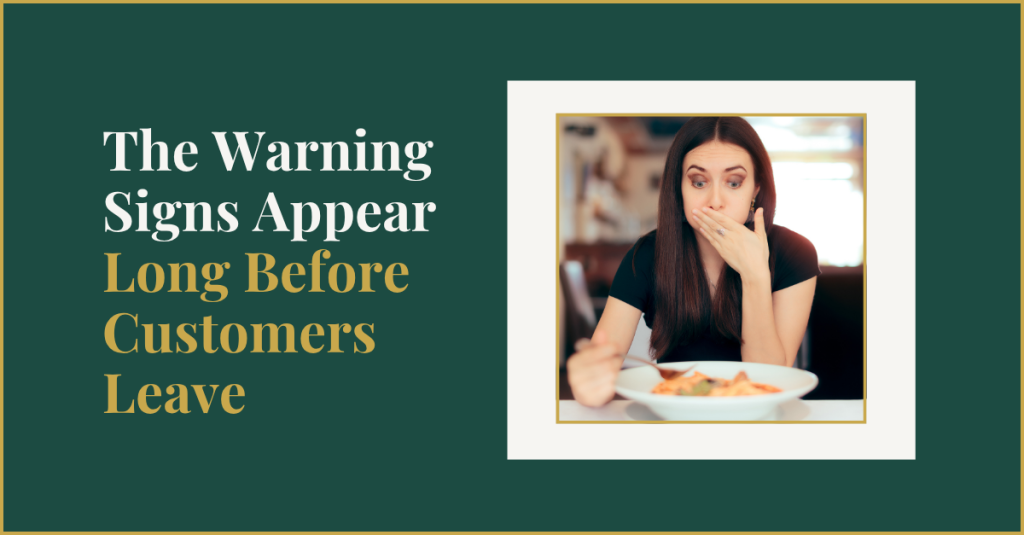
A loyal customer’s story — and why the small things were never small
My name is Dana, and for six years there was one restaurant I trusted with everything that mattered. I want to tell you why I stopped going. Not because something terrible happened — that’s the part I keep coming back to. Nothing terrible ever happened. It was all small things. They were never small.
Let me introduce you to the place. Avancé was a mid-sized restaurant downtown — white tablecloths, but not stiff, the kind of place you take people when you want them to feel looked after.
And let me introduce you to Marcus, who ran the front of house. From the first month, Marcus knew my name, and somewhere around the first year he knew my life: that my daughter Mia got the little chocolate cake that wasn’t on the menu, that I liked the check brought over quietly and set down rather than announced to the whole table.
Avancé was where we went for all of it. Mia’s birthdays, every one. The anniversary. The dinner the night my mother’s news was good, and the one two years later when it wasn’t. The quarterly dinner with my team, where I was always the one who chose the place, because I was the one who could be trusted to choose right.
And what made it the place wasn’t one grand thing. It was the small things, done the same way every single time. My water glass was never empty — I never once had to look around for someone, it was just full again.
The bread came before I thought to want it. Marcus and his team were warm without ever hovering. And the food. The food was always, exactly, on point. The salmon I ordered in March tasted like the salmon I ordered in September.
That sounds like the smallest thing in the world until you realize it’s the hardest thing in the world to do — to make a dish taste the same on a Tuesday in winter as it did on a Saturday in summer, no matter who’s in the kitchen. They did it for six years. I never had to ask for anything. I never had to hope. I just got to be there.
The night my mother’s scan came back wrong, I didn’t even decide to go. My feet took me, with Mia quiet beside me. Marcus saw my face and didn’t say a word — he walked us to the quiet corner behind the half-wall and brought a pot of tea I hadn’t ordered, and let us sit there until close. That was the night I knew I’d never go anywhere else. They didn’t just feed me. They held the moment for me.
I don’t think I noticed the first time something was off. The bread didn’t come, and I waited, and then I asked, and it arrived with an apology. Fine. Everyone has a night. I didn’t think about it again.
But the small things kept being a little off, and never the same one twice. One visit my glass sat empty through the whole main course and I finally flagged someone down for water — water, the easiest thing there is.
The next time the salmon came out different. Not bad. Just not the dish I’d driven across town for. Saltier, somehow. A different hand in the kitchen, I guessed. Another night the mains took an hour, and the table seated after ours was paying their check while my team sat waiting, and I felt that small, specific embarrassment of having promised them something — having vouched for this place — and watching it not quite arrive.
None of it was worth a complaint. That’s what I want you to understand.
Not one of those nights was a thing you’d send back, or write a review about, or mention to a manager.
A late bread basket. A warm glass of nothing. A salmon that tasted like someone else made it. Each one, on its own, was nothing. I made excuses for every single one of them, because they’d been so good for so long that I gave them the grace I’d give a friend.
But I started doing the work that used to be theirs. Asking for the refill. Reminding them about the bread. Bracing, a little, for which version of the food would come out. And here’s the thing about being loyal — I noticed all of it more than a stranger would, not less. A first-timer who got the saltier salmon just thinks, that was fine, and never knows what they missed. I knew exactly what I was missing, every time, because I’d had the real thing for six years.
My loyalty didn’t make me forgiving forever. It made me the one person who could feel the drift the soonest.
The night I left for good there was no scene. There’s never a scene.
It was Mia’s birthday and I was on the phone to book the window table, and I caught myself hesitating with the call still ringing. For the first time in six years I thought: I’m not sure tonight is the night to find out which Avancé we’ll get. It was her birthday. I didn’t want to find out. So I hung up and called the new place across town. Just this once, I told myself.
It was fine, too. The difference was that I had nothing to brace for. And the next time something mattered, I didn’t think of Avancé first. And then, after a while, I didn’t think of them at all.
I never complained. I never wrote a review. I never told them why. Six years of every moment that mattered to me, and I walked away over a string of small things — and I’d bet they never even knew I was gone.
So that’s why I stopped coming. Not one bad night. A hundred small ones, each forgivable, that added up to a place that no longer knew how to be itself.
Those small things have a name
If you run the place she left, here is what her story is telling you. Every one of those small misses — the empty glass, the late bread, the salmon that changed — is strategic misalignment showing up at the table. The gap between the experience you promise and what your operation delivers, one plate at a time. (That gap has a framework, and a cost most companies never compute.)
It feels small because no single miss is worth a complaint. That is exactly why it’s dangerous. Your loyal customers won’t tell you — PwC found that 32% of people leave a brand they love after a single bad experience, with no warning at all. And your most loyal customers, the Danas, feel the drift first and most sharply, because they know precisely what the real thing felt like. They are your earliest signal and your most expensive loss: a 5% lift in retention can raise profit 25–95%.
This is the whole point: customer experience is everything. Not a slogan, not a department — it is the business, delivered one small moment at a time. And consistency in those moments isn’t the charm of a great server having a good night. It’s the output of how the operation is designed. When you were small, you held it together by being in the room. When you grew, no one was in every room, and the small things started slipping in a hundred places you can’t see from the top.
That is fixable, and it is the work. A $5.4M restaurant we rebuilt took its NPS from 31 to 58 and cut manager turnover 80% in ten months — not by chasing new guests, but by redesigning the operating model so the small things happened the same way every time, without the owner standing in the room to make them. Rebuild the model, and the refill comes before she asks, the salmon tastes like the salmon, and Dana never has a reason to hesitate with the call still ringing.
Find your gap before your next Dana does
Start by measuring it. Take the Cassidine Scorecard to see where your Theory Reality Gap is widest, or book a no-cost, no-pitch advisory call — sixty minutes to find the gap that’s leaking the most. If there isn’t a fixable one, you’ll hear that too.
Sources & further reading
Research
• PwC, Experience Is Everything: Here’s How to Get It Right — 32% leave a brand they love after one bad experience.
• Harvard Business Review / Bain & Company, The Value of Keeping the Right Customers — a 5% lift in retention raises profit 25–95%.
From Cassidine Consulting
• What Is the Theory Reality Gap?
• Strategic Misalignment: The Hidden Cost of Growth
• Case Study: How a $5.4M Restaurant Rebuilt Its Service Operating Model